
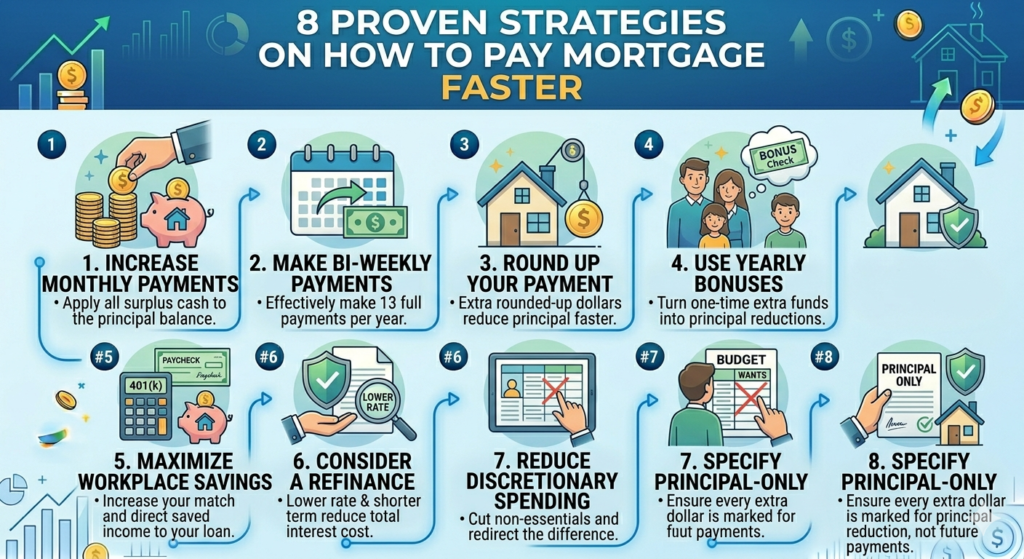
Paying off a mortgage faster is a goal for many homeowners. While a 15- or 30-year mortgage provides manageable monthly payments, it also means paying thousands of dollars in interest over the life of the loan. By adopting smart strategies, you can reduce your mortgage term, save on interest, and achieve financial freedom sooner.
In this guide, we’ll explore actionable methods on how to pay a mortgage faster, analyze the benefits, provide practical examples with tables, and answer common questions homeowners ask. Whether you are aiming to reduce debt, save money, or plan for retirement, these strategies can help you take control of your mortgage.
H2: Why Paying Your Mortgage Faster Matters
Paying a mortgage faster isn’t just about saving interest—it’s about gaining financial flexibility and peace of mind.
- Interest Savings: The sooner you pay off your mortgage, the less interest accrues over time.
- Equity Growth: Faster payments increase home equity, which can be useful for loans or selling.
- Financial Freedom: Without mortgage obligations, you can redirect funds toward investments or retirement.
- Risk Reduction: Eliminates the risk of foreclosure due to job loss or financial hardship.
By understanding the impact of accelerated payments, homeowners can make informed decisions and prioritize their financial goals.
H2: Strategy 1 – Make Extra Principal Payments
One of the simplest ways to pay your mortgage faster is by making extra payments toward the principal. Even small additional payments can significantly reduce your mortgage term and total interest.
Example Table: Extra Principal Payments Impact
| Loan Amount | Interest Rate | Term | Extra $100/Month | New Term | Interest Saved |
|---|---|---|---|---|---|
| $300,000 | 6% | 30 yr | $100 | 25 yr | $28,000 |
| $200,000 | 5% | 30 yr | $200 | 23 yr | $20,000 |
| $400,000 | 4.5% | 30 yr | $150 | 26 yr | $35,000 |
Small extra payments reduce the principal balance faster, which compounds into long-term savings.
H2: Strategy 2 – Make Biweekly Payments
Instead of paying monthly, consider splitting your mortgage payment in half and paying every two weeks. This results in 26 half-payments or 13 full payments per year, effectively adding one extra payment annually.
Impact Table: Biweekly vs Monthly Payments
| Loan Amount | Term | Interest Rate | Monthly Payment | Biweekly Savings | New Term |
|---|---|---|---|---|---|
| $300,000 | 30 yr | 6% | $1,799 | $25,000 | 27 yr |
| $250,000 | 30 yr | 5% | $1,342 | $18,500 | 26 yr |
This method is automated with many lenders and requires minimal effort while producing noticeable savings.
H2: Strategy 3 – Refinance to a Shorter Term
Refinancing your mortgage to a shorter term (e.g., 15 years instead of 30) can help you pay off your mortgage faster, though monthly payments may increase.
- Benefit: Lower interest rate and faster equity growth.
- Consideration: Must evaluate affordability and refinancing costs.
Refinance Example Table
| Original Loan | Original Term | New Term | Rate | New Payment | Interest Saved |
|---|---|---|---|---|---|
| $300,000 | 30 yr | 15 yr | 4% | $2,219 | $150,000 |
| $200,000 | 30 yr | 15 yr | 3.5% | $1,429 | $85,000 |
Refinancing may be especially beneficial when rates are lower than your original loan.
H2: Strategy 4 – Apply Windfalls to Mortgage
Using unexpected funds—bonuses, tax refunds, or inheritances—to pay down the principal is a powerful strategy.
Example Table: Windfalls Applied to Principal
| Windfall Amount | Principal Remaining | Interest Saved | Time Saved |
|---|---|---|---|
| $5,000 | $250,000 | $7,500 | 6 months |
| $10,000 | $300,000 | $15,000 | 1 year |
| $15,000 | $400,000 | $22,000 | 1.5 years |
Even a single large payment can dramatically reduce both interest and term.
H2: Strategy 5 – Round Up Your Payments
Rounding up your monthly mortgage payment to the nearest hundred can accelerate payoff. For example, if your payment is $1,742, rounding to $1,800 adds an extra $58 toward principal each month.
Impact Table: Rounded Payments
| Monthly Payment | Rounded Payment | Extra to Principal | Time Saved | Interest Saved |
|---|---|---|---|---|
| $1,742 | $1,800 | $58 | 8 months | $4,200 |
| $2,120 | $2,200 | $80 | 1 year | $5,800 |
This strategy is simple, automated, and doesn’t require major lifestyle changes.
H2: Strategy 6 – Avoid New Debt
Taking on additional debt can slow your progress. Credit cards, car loans, or personal loans increase your debt-to-income ratio and may affect refinancing or extra payments.
- Tip: Focus on paying off high-interest debts first, then direct funds toward your mortgage.
- Benefit: Preserves ability to make extra mortgage payments without strain.
H2: Strategy 7 – Consider Principal-Only Payments
Some lenders allow principal-only payments. This ensures your extra funds directly reduce the loan balance rather than covering interest.
Example Table: Principal-Only vs Mixed Payments
| Loan Amount | Monthly Payment | Principal-Only Extra | Interest Saved | Term Reduced |
|---|---|---|---|---|
| $300,000 | $1,799 | $200 | $18,000 | 2 years |
| $250,000 | $1,342 | $150 | $12,000 | 1.5 years |
Principal-only payments are a targeted way to accelerate mortgage payoff efficiently.
H2: Strategy 8 – Automate Extra Payments
Automation ensures consistency, avoiding missed opportunities to pay down principal.
- Set Up: Schedule monthly or biweekly extra payments.
- Benefit: Reduces the temptation to spend extra funds elsewhere.
- Tip: Confirm with your lender that extra payments are applied to principal.
H2: FAQs – How to Pay Mortgage Faster
Q1: Can I pay extra without penalty?
A: Most mortgages allow extra payments, but check for prepayment penalties.
Q2: Will making extra payments affect my credit score?
A: No, paying faster reduces debt and can improve your credit over time.
Q3: How much extra should I pay monthly?
A: Even $50–$100 extra can significantly shorten your mortgage term over 30 years.
Q4: Should I refinance or make extra payments?
A: Evaluate interest rates, refinancing costs, and your ability to increase monthly payments.
Q5: What’s the fastest way to pay off a mortgage?
A: Combining biweekly payments, extra principal, and windfalls is most effective.
Conclusion
Paying off your mortgage faster requires planning, discipline, and smart strategies. By making extra payments, considering biweekly schedules, refinancing, using windfalls, rounding up payments, avoiding new debt, focusing on principal-only payments, and automating, homeowners can save thousands in interest and achieve financial freedom sooner.
Understanding how to pay mortgage faster empowers you to take control of your finances and enjoy life without the burden of long-term debt.